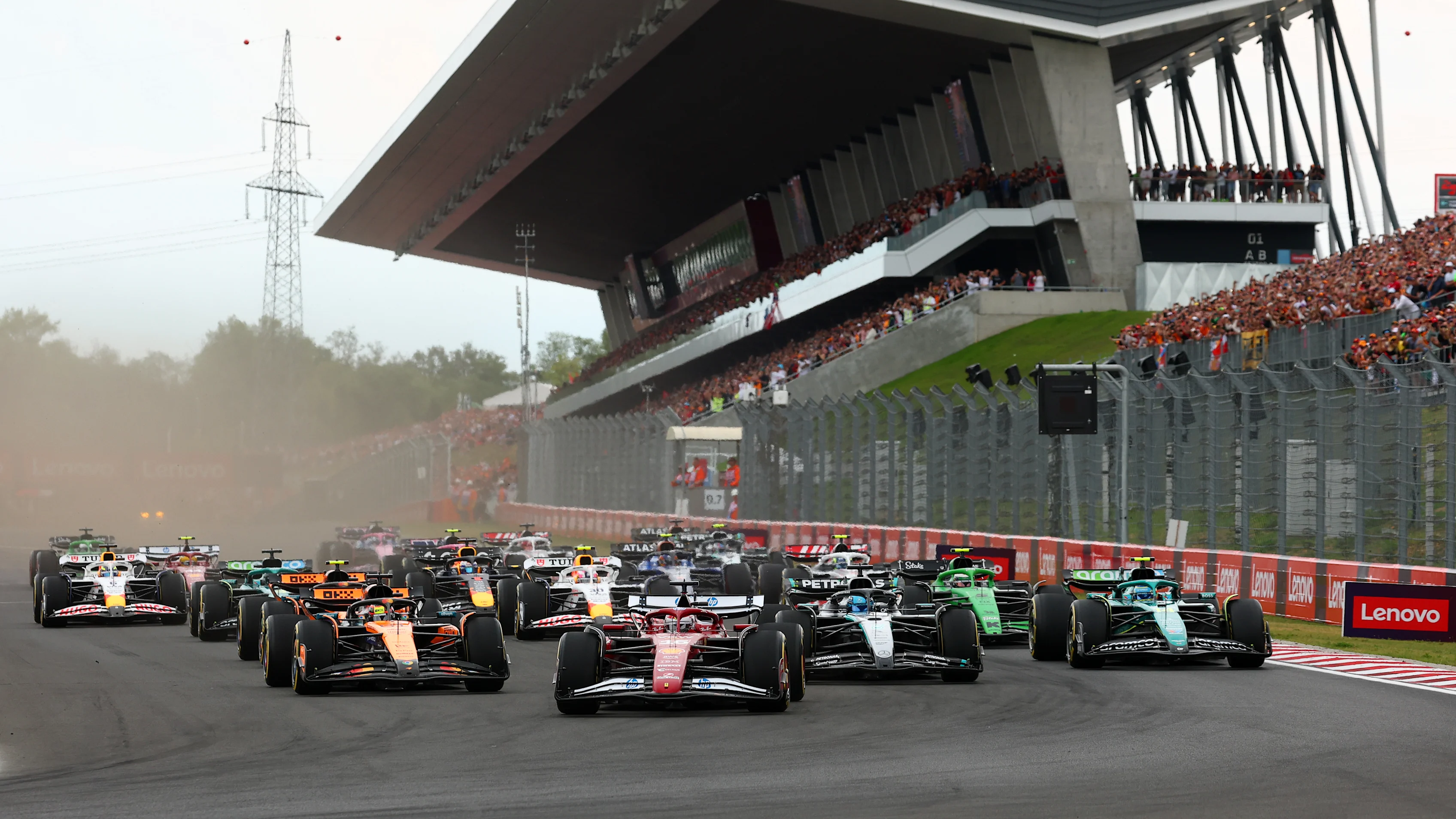
Everything you need to know about the Hungaroring
As F1 heads to the Hungaroring for the Hungarian Grand Prix, we take a look at the history and technical challenges of this iconic circuit. Originally built in under nine months to host the first F1 race behind the Iron Curtain in 1986, the track has evolved significantly over the years, including a major layout revision in 2003.
Often compared to a large karting track, the Hungaroring features a tight, twisty, and narrow layout. Former F1 driver Jolyon Palmer highlights the importance of rhythm, as the track's linked corners require precise positioning. While overtaking is challenging due to the lack of long straights, Palmer notes that opportunities can be found, particularly heading into Turns 1 and 2.
This season introduces new technical regulations: 'Straight Mode' and 'Overtake Mode'. Straight Mode, which replaces DRS, optimizes aerodynamics by adjusting both the front and rear wings across four designated zones to reduce drag. Meanwhile, Overtake Mode provides a boost of electrical power for one straight per lap, with the detection point located at Turn 14, enabling drivers to gain an advantage heading onto the start/finish straight.